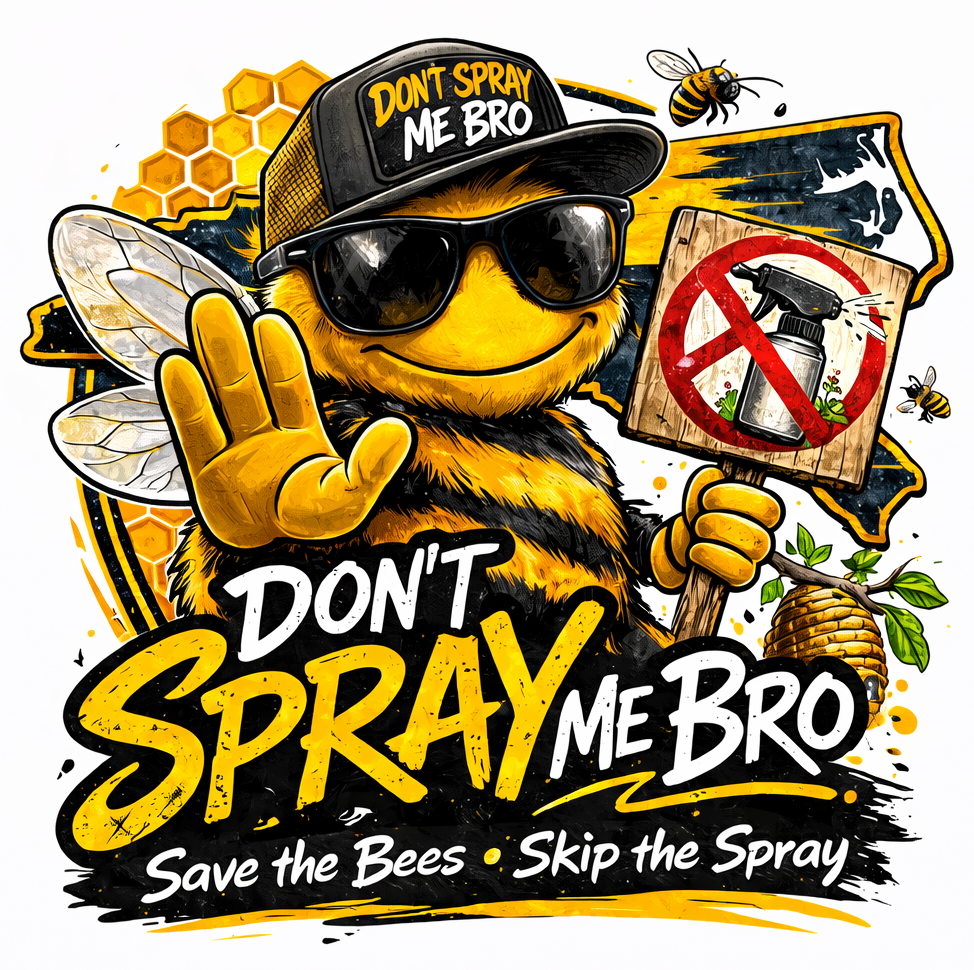
Don't Spray Me Bro.
The "weeds" in your yard are feeding our bees. The chemicals on your lawn are killing them. Here's everything you need to know.
The Problem Is in Your Yard
Every spring, millions of homeowners across North Carolina reach for herbicide bottles and hire lawn services to wage war on clover, dandelions, and violets. Every summer, mosquito trucks spray pyrethroids down residential streets, and neighbors hire companies to fog their yards with broad-spectrum insecticides.
The result? We're systematically destroying the food sources and habitat that 500+ species of native bees, 170+ species of butterflies, and countless other pollinators depend on to survive. These are the same pollinators responsible for one out of every three bites of food you eat.
Did You Know?
A Xerces Society study found that 100% of yards treated by private mosquito spray companies had pyrethroid levels high enough to kill beneficial insects. And 75% of neighboring yards — where no spraying was requested — were also contaminated by drift. When your neighbor sprays, your bees pay the price too.
Learn. Grow. Protect.
Stop Calling Them Weeds
Clover, dandelions, violets, goldenrod — the plants you spray are the lifeline your pollinators need. See full profiles of every "weed" worth saving.
Explore Beneficial "Weeds" →Native Grasses
Little bluestem, switchgrass, broomsedge — NC's native grasses heal soil, provide habitat, and look stunning. Meet your lawn's replacements.
Explore Native Grasses →Native Shrubs
Buttonbush, elderberry, spicebush, blueberry — the native shrubs that feed bees, host butterflies, and produce food for your family.
Explore Native Shrubs →Trees for Bees
Sourwood, tulip poplar, red maple — the native trees that power NC's legendary honey and keep colonies alive. A single tulip poplar bloom can fill a bee's stomach in one visit.
Explore Native Trees →Chemical Dangers
Neonicotinoids, glyphosate, pyrethroids, 2,4-D — the chemicals in your lawn products and mosquito sprays that are destroying pollinator populations.
See What's Killing Bees →HOA & Your Rights
Your HOA says your native garden is a "violation"? Learn your rights, strategies for approval, and how to change outdated landscaping rules in NC.
Know Your Rights →Myth vs. Truth
Goldenrod causes hay fever
Goldenrod's heavy, sticky pollen is carried by insects, not wind. It physically cannot cause allergies.
Ragweed causes hay fever
Ragweed, which blooms at the same time as goldenrod but has tiny green flowers, is the actual culprit. Different plant entirely.
Clover is a lawn weed
Clover was a standard ingredient in lawn seed mixes until 2,4-D herbicide killed it — so the industry simply rebranded it as a weed.
Clover is a self-fertilizing wonder
Clover fixes nitrogen from the air into soil, feeds bees all summer, stays green during drought, and tolerates foot traffic. It's free fertilizer.
Mosquito sprays target only mosquitoes
Pyrethroids are broad-spectrum — they kill every insect they contact, including bees, butterflies, and fireflies.
Better alternatives exist
Eliminate standing water, encourage bats and dragonflies, use Bti larvicide dunks — these target mosquitoes without harming pollinators.
Ready to Take Action?
Whether you're converting your first square foot of lawn or fighting your HOA for the right to grow native, we've got step-by-step guides to help.
 A Project of Save the Bees NC
DontSprayMeBro.com is an educational initiative of Save the Bees NC, a 501(c)(3) nonprofit dedicated to pollinator conservation and beekeeping education.
Visit Save the Bees NC →